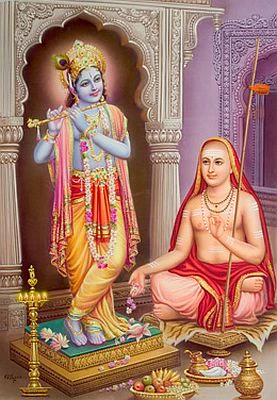
1st December 2025 marked Bhagavad Gītā Jayanti, which is observed on the 11th day of the bright half of the Hindu lunar month of Mārgaśīrṣa. It celebrates the moment when Śrī Kṛṣṇa, over 5,000 years ago as held by the Vedic tradition, spoke to Arjuna on the battlefield of Kurukṣetra, addressing his confusions and doubts on choosing duty over the latter’s perceived morality. What unfolded was not simply advice from one powerful warrior to another, but a conversation that has since shaped spiritual and philosophical thought.
For centuries, the words of the Gītā have reached far beyond mandirs and scholars. These words have resonated with people from all walks of life, ranging from individuals requiring guidance in the face of difficult choices to those who are searching for meaning and identity. Gītā Jayanti is not just any ordinary day, but a day to honour and revisit a text that continues to offer practical insight into how to think, act, and live.
Something incredible about the 700 versed Bhagavad Gītā is its structure. Each verse follows a rhythm – most following 32 syllables, and some following 44 syllables with a set pattern of heavy (guru) and light (laghu) sounds. The word gītā means “song,” reflecting its original nature as a sacred teaching meant to be spoken, heard, and sung aloud. It is not a purely academic text, but designed to be remembered through sound, rhythm, and voice. When chanted correctly, its sound can be felt deeply, the vibrations working subtly upon the mind and body, calming the senses and guiding the listener toward clarity and inner peace. The fact that it can be chanted, makes the Bhagavadgītā accessible to all, not only the learned or scholarly, but also to children and those unfamiliar with its philosophical complexities.
Within this sacred dialogue, the human experience unfolds with Arjuna’s questioning feeling relatable, even today. His struggle reflects the moments when we find ourselves unsure of the right path, weighed down by conflicting responsibilities and emotions. Kṛṣṇa’s responses do not offer simplistic answers, but encourage self-awareness and introspection into one’s understanding of their role in this world. Even in the classrooms, the Gītā continues to find relevance. It is a core text in the IGCSE Sanskrit syllabus, providing students with an opportunity to explore grammar and new vocabulary, whilst allowing for reflection on topics such as identity and purpose, for many becoming a meaningful introduction to Sanskrit language and philosophy. What makes the Gītā enduring is its openness, not dictating a single way of life, but encouraging the exploration of different yogic paths such as action (karma), devotion (bhakti), and knowledge (jñāna). This devotional aspect of the Gītā is further enriched by the Bhagavadgītā Māhātmya, traditionally attributed to Ādi Śaṅkarācārya. In this work, Śaṅkara does not approach the Gītā as a text to be analysed alone, but as a sacred presence to be revered. He presents it as the essence of the Upaniṣads and the distilled wisdom of the Vedas, portraying Kṛṣṇa as the supreme teacher and Arjuna as a reflection of every human being’s inner conflict. The battlefield becomes a symbolic space where ignorance and awareness meet. Through this perspective, engaging with the Gītā steadies the mind and draws the seeker towards clarity and self-realisation. As we observe Gītā Jayanti, we are reminded that this is not simply a celebration of the past, but an opportunity to reconnect with ideas that help us simplify the uncertainties of modern life.
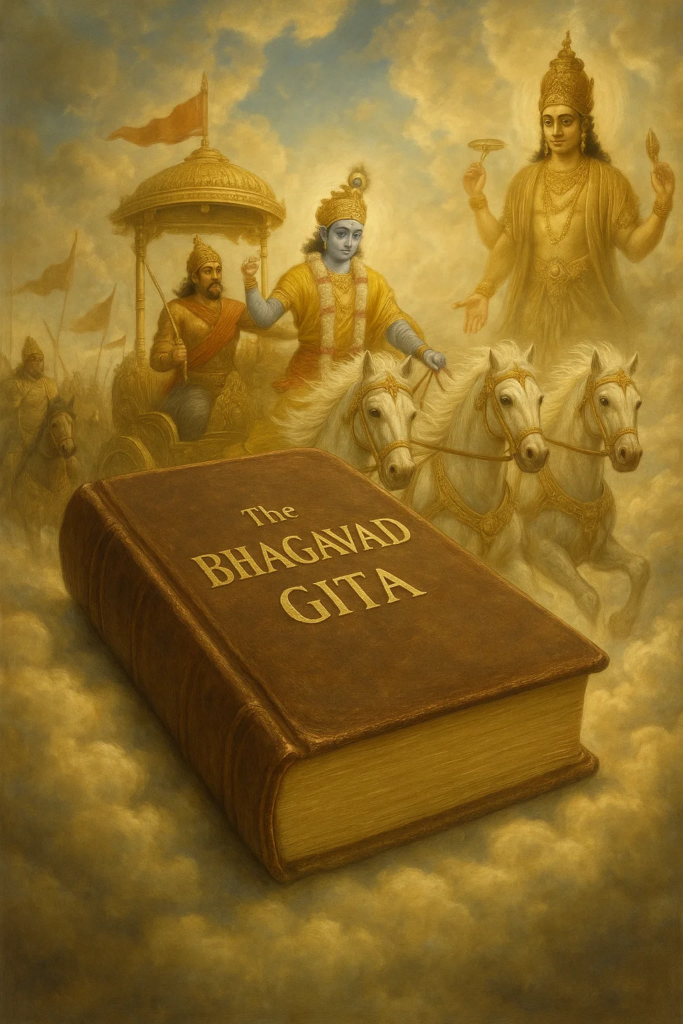
Translation of the Bhagavadgītā Māhātmya by Ādi Śaṅkarācārya
(1) Whoever studies this teaching, the Gītā, with devotion and sincerity attains the feet of Lord Viṣṇu, becoming free from fear, sorrow, and all such afflictions.
(2) For one who regularly studies the Gītā and practises prāṇāyāma, there remain no sins, not even those accumulated from previous births.
(3) Bathing daily in water cleanses the dirt of the body; but a single bath in the nectar of the Gītā destroys the impurities of worldly existence.
(4) The Gītā must indeed be recited well. What need is there for other elaborate scriptures, when the Gītā has itself flowed from the lotus-mouth of Padmanābha (Śrī Kṛṣṇa)?
(5) The very essence of the nectar of the Mahābhārata has flowed from the mouth of Viṣṇu. One who drinks the Gītā, the sacred Gaṅgā-water of wisdom, never again takes birth.
(6) All the Upaniṣads are like cows; Kṛṣṇa, the son of the cowherd, is their milker; Arjuna is the calf; and the wise drink the great nectar-milk called the Gītā.
(7) One treatise: the Gītā spoken by the son of Devakī.
One deva: the son of Devakī alone.
One mantra: His many names.
And one duty: the service of that divine Lord.